Revenue Operations
What makes a seller ask for better CRM data?
Narrative AI turns CRM data into seller-ready account context for prospecting, closing, and expansion. Better data helps reps sell, so they use it, request improvements, and approve AI-generated changes before they write back. Seller value and CRM quality compound together.
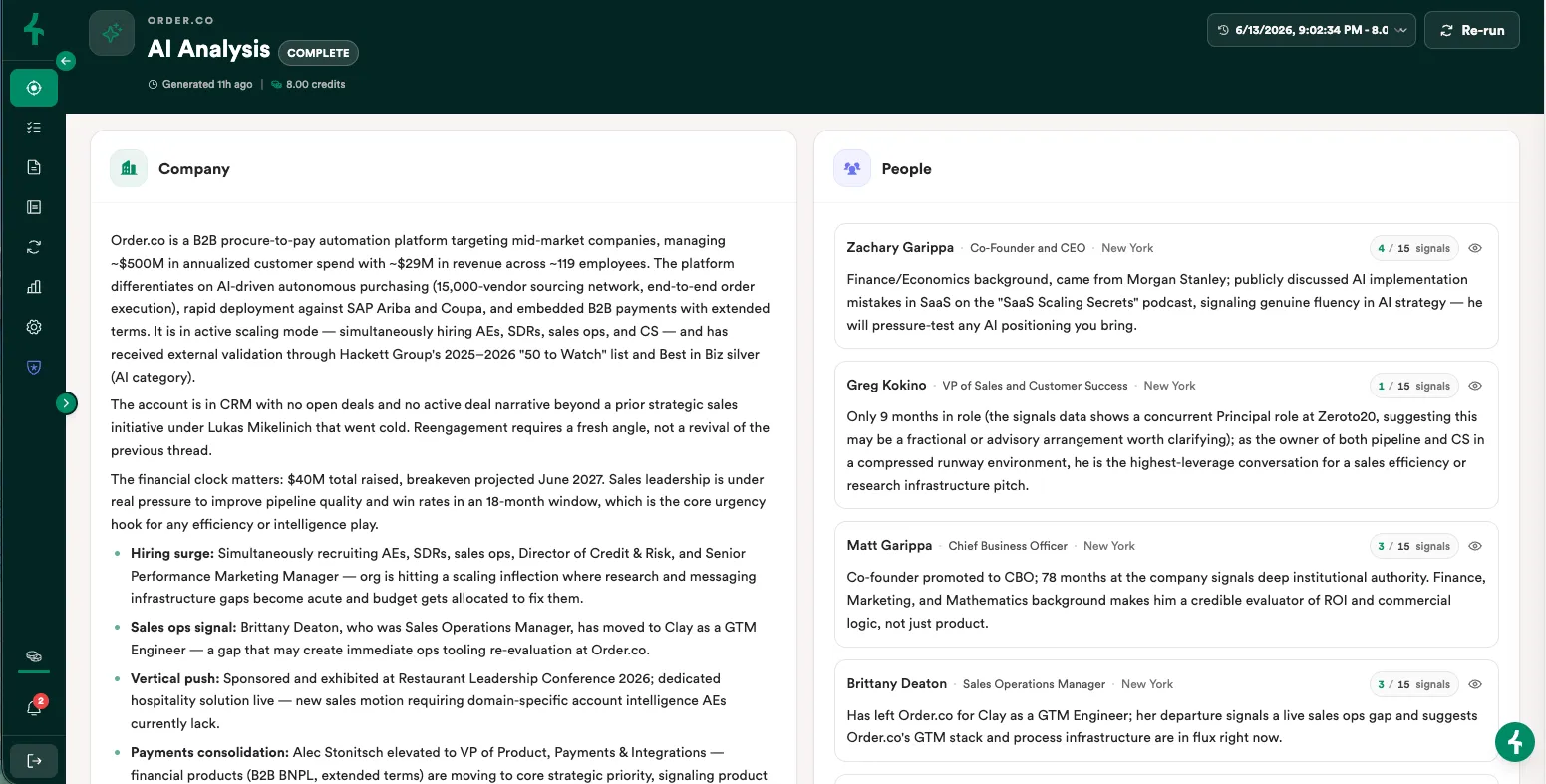
CRM and account signals become the company, buyer, and deal context a seller needs for the next move.
The status quo
You have already built the fields, definitions, and handoffs your revenue team needs. At 4:30 on Friday, the buyer role is in a rep’s notes, the reason to act is in a browser tab, and the CRM next step is already stale. Reps make time for information that changes the next call or deal decision; data that does not return that value becomes another cleanup process for you to manage. In the past, closing the gap meant choosing how many hours your team could spend designing rules, chasing context, and reconciling records by hand.
How Narrative fits
Turn CRM data into seller value first, then manage the feedback loop that keeps improving it.
- Put CRM data to work for the seller. Narrative combines the account data you already have with current company, buyer, and deal context, then structures it around the decisions a rep has to make: where to focus, who matters, why they may act, and what to do next.
- Carry that value through the revenue motion. The same account context supports prospecting, closing, and expansion, so better data improves work the rep already needs to do instead of creating a separate hygiene task.
- Design the process up front. Revenue Operations defines the account inputs, reusable plays, and CRM write policies before rollout. AI handles the recurring research, structuring, and drafting; your team manages rules, exceptions, and improvement requests instead of rebuilding every account by hand.
- Let value create demand for better data. When account context changes a rep’s next move, stale fields, missing contacts, and incomplete buyer context become specific improvement requests—not abstract cleanup that only Revenue Operations sees.
- Keep AI-generated changes under human control. CRM changes generated by AI stay as suggestions until a rep approves them; direct rep edits follow the CRM write policy Revenue Operations configures.
- Manage the loop, not every record. Approved updates improve the CRM data that feeds the next round of account prep. Better prep creates more seller value, which creates better requests, while Revenue Operations governs the process.
Results to expect
- Seller adoption earned by account context that helps reps plan the next move.
- Specific data-improvement requests tied to the fields, people, and context sellers need.
- Less recurring manual cleanup after the inputs, rules, and review process are in place.
- AI-generated changes that remain governed and rep-approved.
- Cleaner CRM data that becomes more useful with every approved improvement.
Customer story
$50K MRR
A new enterprise AE selected 32 accounts by size and geography, generated 20 opportunities, qualified eight, and closed four for $50K MRR in his first quarter of employment.
Read the storyFirst quarter
4 deals
from 8 qualified
“I built Narrative as an enterprise AE solving my own problem. I had two or three hours a week to actually prospect, and most of it went to research, org charts, and CRM admin instead of buyers. Narrative is the system I wanted next to me, it does the grunt work, and I stay at the tip of the spear.”