Use case · Closing
The harder you push, the slower they close.
Deals speed up when they attach to what the account is already trying to fix — in the client's own words, not your pitch. Narrative maps the committee and surfaces each buyer's live initiatives; your reps make the case from there.
Narrative maps the committee, drafts the business case, and queues every CRM update. The rep edits every word, clicks send, and approves what writes back.
Map the buying committee and decision process
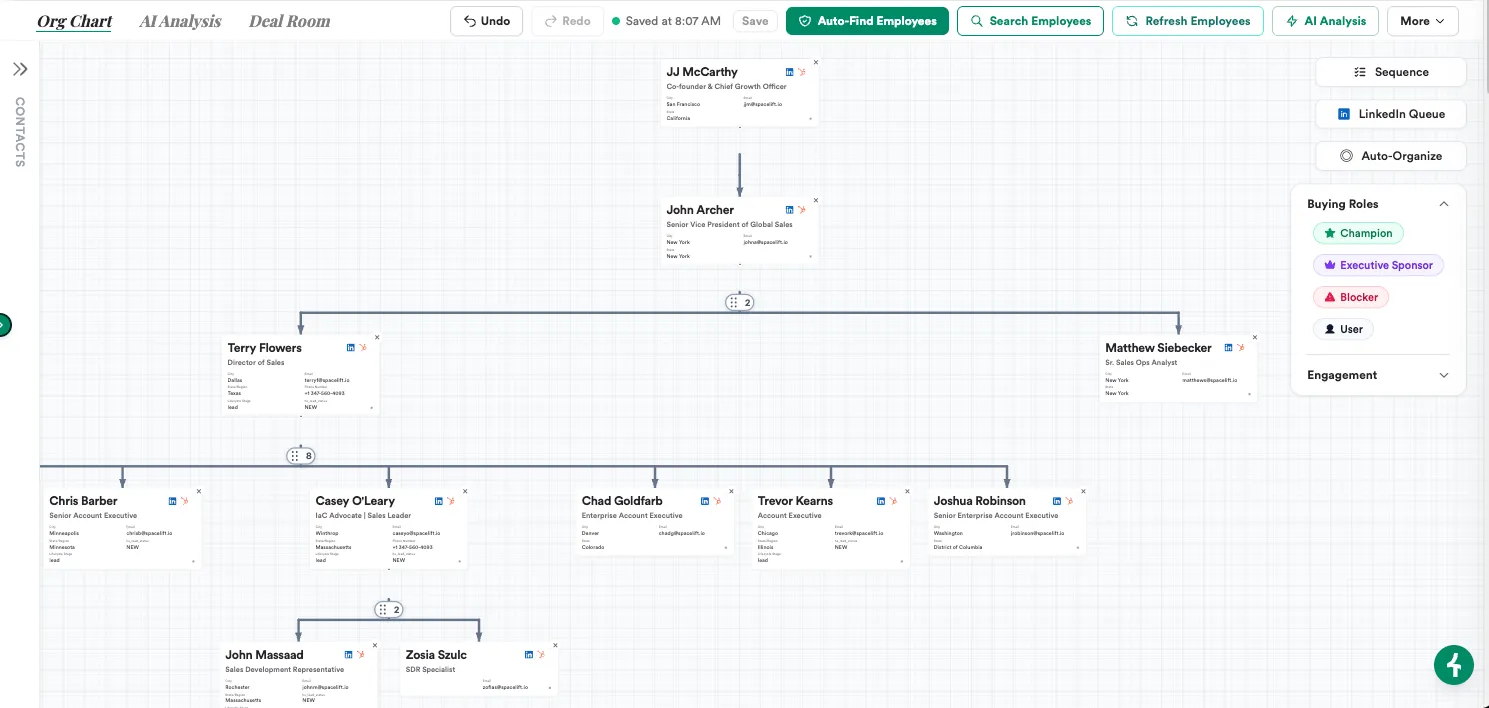
When a deal slows, the instinct is to push the one contact you have — another follow-up, a tighter deadline. But a committee decides, and pressure on one name doesn't move the other seven seats. The people who can quietly kill a deal are rarely the ones taking your calls. Narrative builds that committee on one canvas from your CRM and live research: every player, how they report, and role tags for champion, executive sponsor and blocker that you confirm. A name in a CRM field becomes a map of how the decision actually moves — who signs, who has to be consulted, and where you have no coverage at all. That map is what the rest of the close plan gets built on.
Understand their motivations to take action
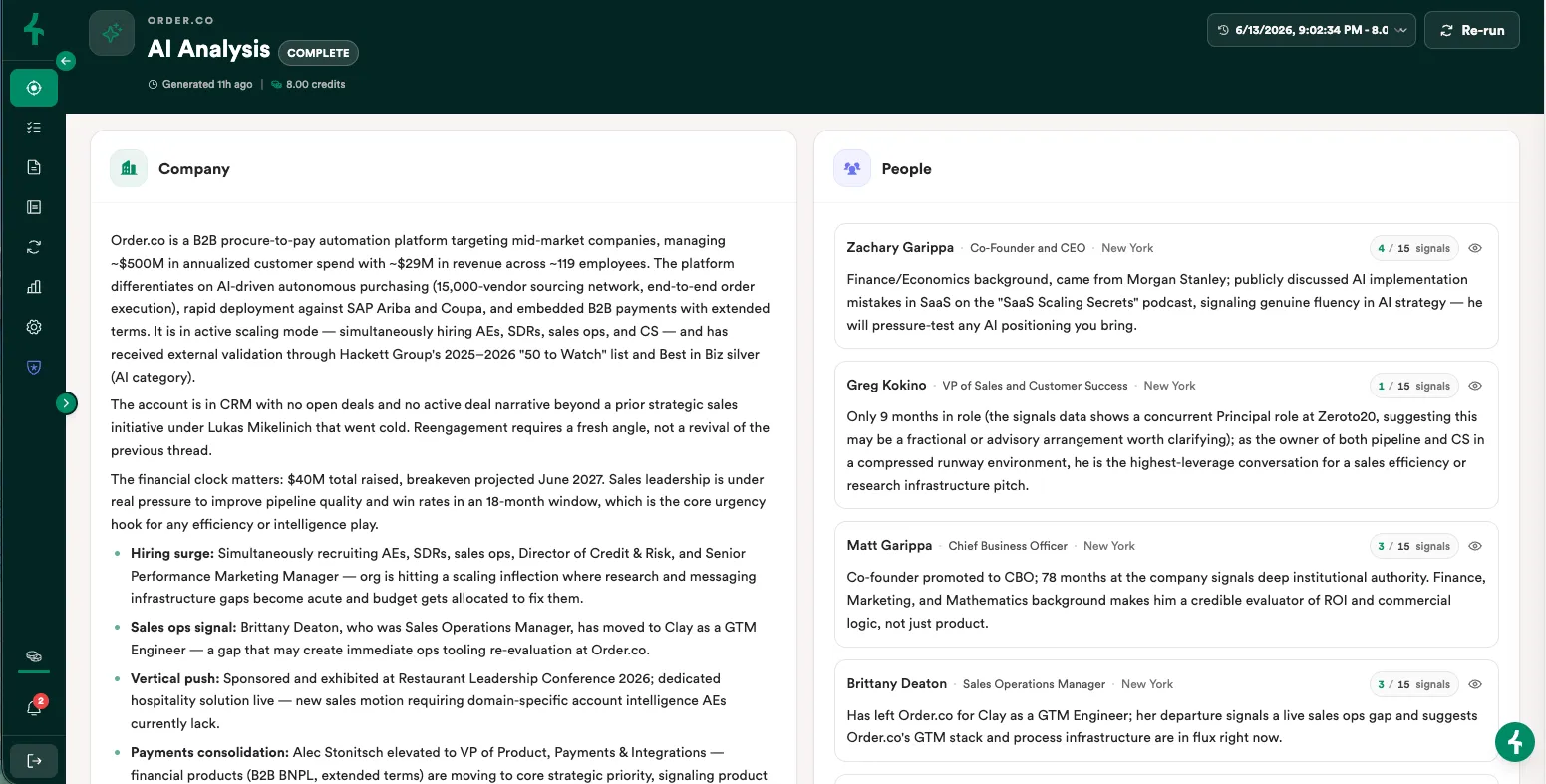
Every push you add to a stalled deal — the circling-back email, the end-of-quarter discount, the deadline that's yours and not theirs — reads to the committee as your urgency. And a committee that can smell your urgency slows down to protect itself. Deals don't close because you manufactured urgency — they close because you attached to something the buyer was already trying to fix. One click runs deep research on the account and on every person on it: the pains, problems and initiatives already in motion, synthesized into one brief the whole deal team reads before the next call. Their own words feed it too — calls are recorded and transcribed, so what was actually said becomes context every other part of the account draws on. You go into the next conversation knowing what each buyer is already motivated to do, and exactly where your deal rides along with it. Pushing adds your urgency to the room; attaching borrows urgency that was already there. That's why the harder you push, the slower they close — and why the fastest deals never feel pushed at all.
Build and validate champions
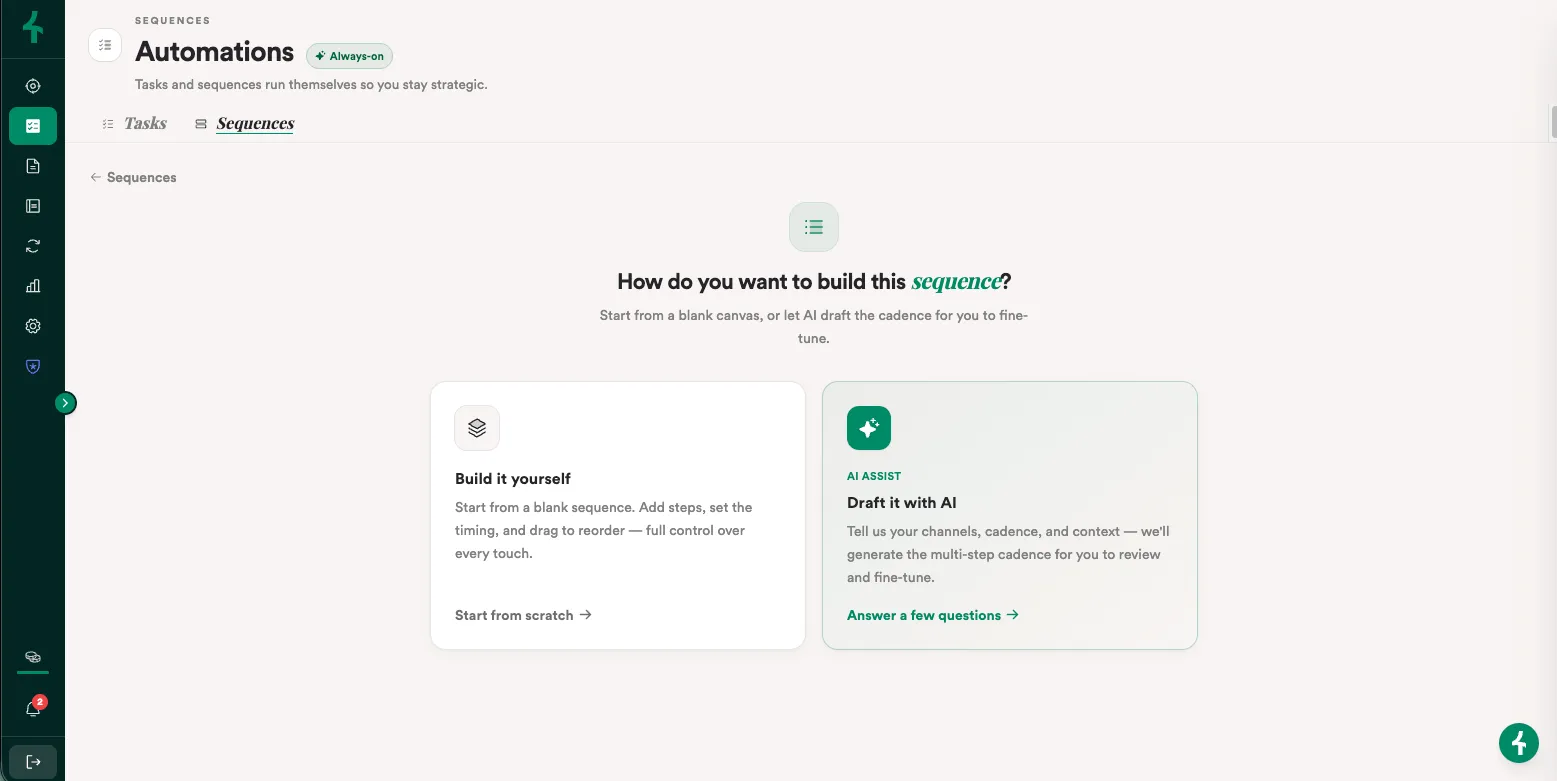
A champion is someone who will spend their own credibility on you, and you only find out by asking them to. Select the personas you need straight off the org chart and enroll them in a few clicks — each one picking up a cadence whose messages are drafted from their own research, in your voice, each opening on something that person is already trying to fix — so going wider never reads as pushing harder. Every message lands on your task list to edit and send. Nothing fires on autopilot; you click send on every one, and momentum shows up as replies, meetings and internal introductions from more than one name — while the people who never move tell you just as clearly where the deal isn't real yet. Narrative also watches the champions you've named, so if one changes jobs mid-cycle you hear it from the platform rather than from a bounced email. And going wide doesn't go around your champion when it's done with them — you're building their coalition, not working behind their back.
Align champions and internal resources behind closure
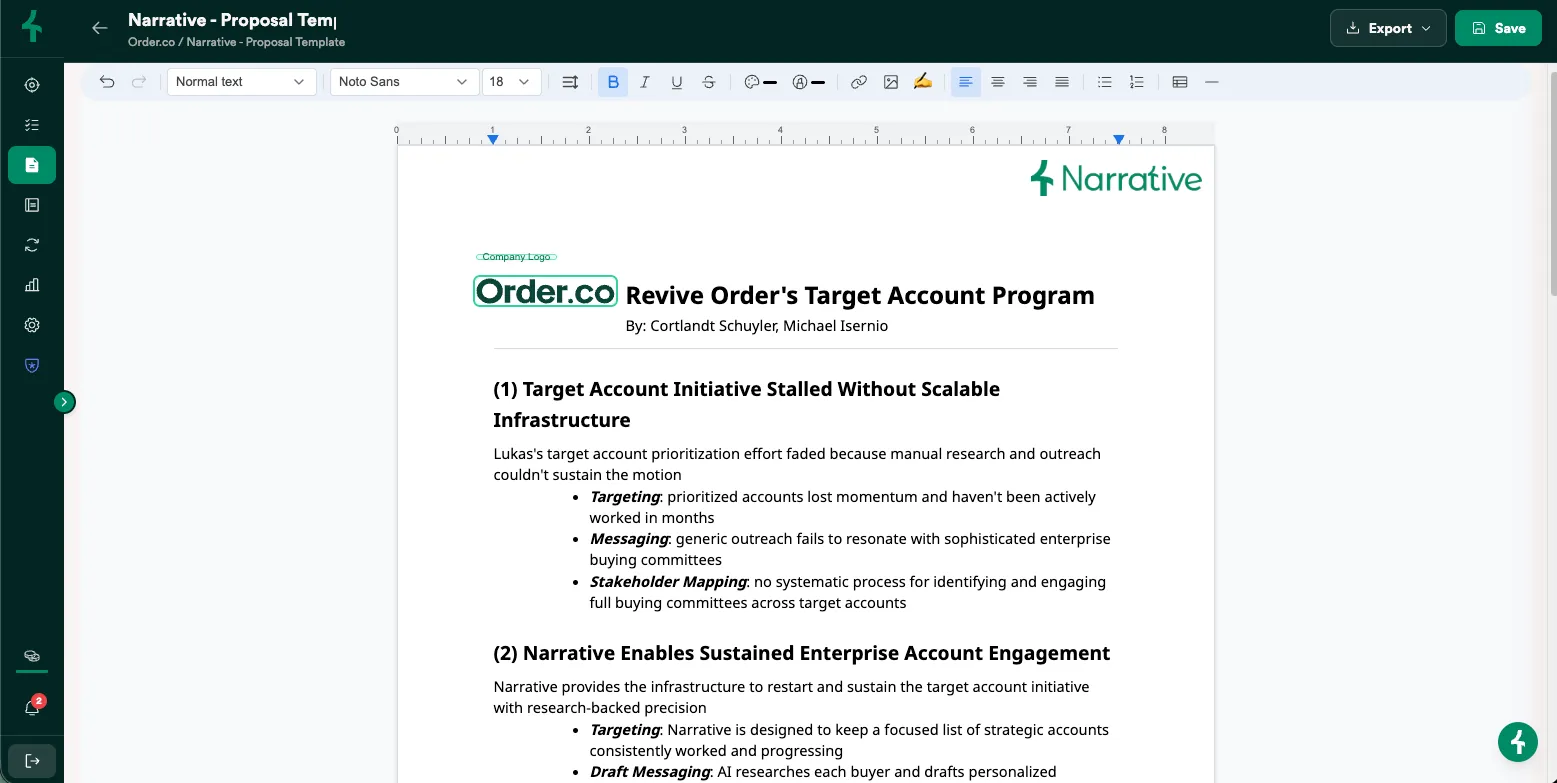
Closing a first deal is a project with two teams in it: your SE, your manager and legal on one side; security review, procurement and the exec who signs on the other. Narrative gives both sides one place to run it — a branded deal room with a mutual action plan where the steps, owners and dates are visible to the buyer, and every document lives in one thread instead of scattered across inboxes. When the buyer's own names are against the dates, the close date stops being a deadline you push and becomes a plan they're keeping. On your side, you, your manager and anyone joining the account read the same committee map and deal narrative, so a single-threaded deal surfaces in the first five minutes of the forecast call rather than the post-mortem. Nobody walks in cold, and nobody's version of the close plan is a week out of date.
Enable champions to sell internally
Your champion makes the case in a room you will never be in, and most of them are improvising it. Narrative drafts that internal business case straight from the deal — the problem in their own words — pulled from what they actually said on your calls — the fit, and the proof points their leadership will ask about — built off your own templates so it reads like your company wrote it. You edit every line before it leaves the building, then hand it over in the deal room, where they can forward it and where the contract sits ready to sign at the end of the same thread. Your champion stops improvising and starts presenting.
Measure and track success on the account level
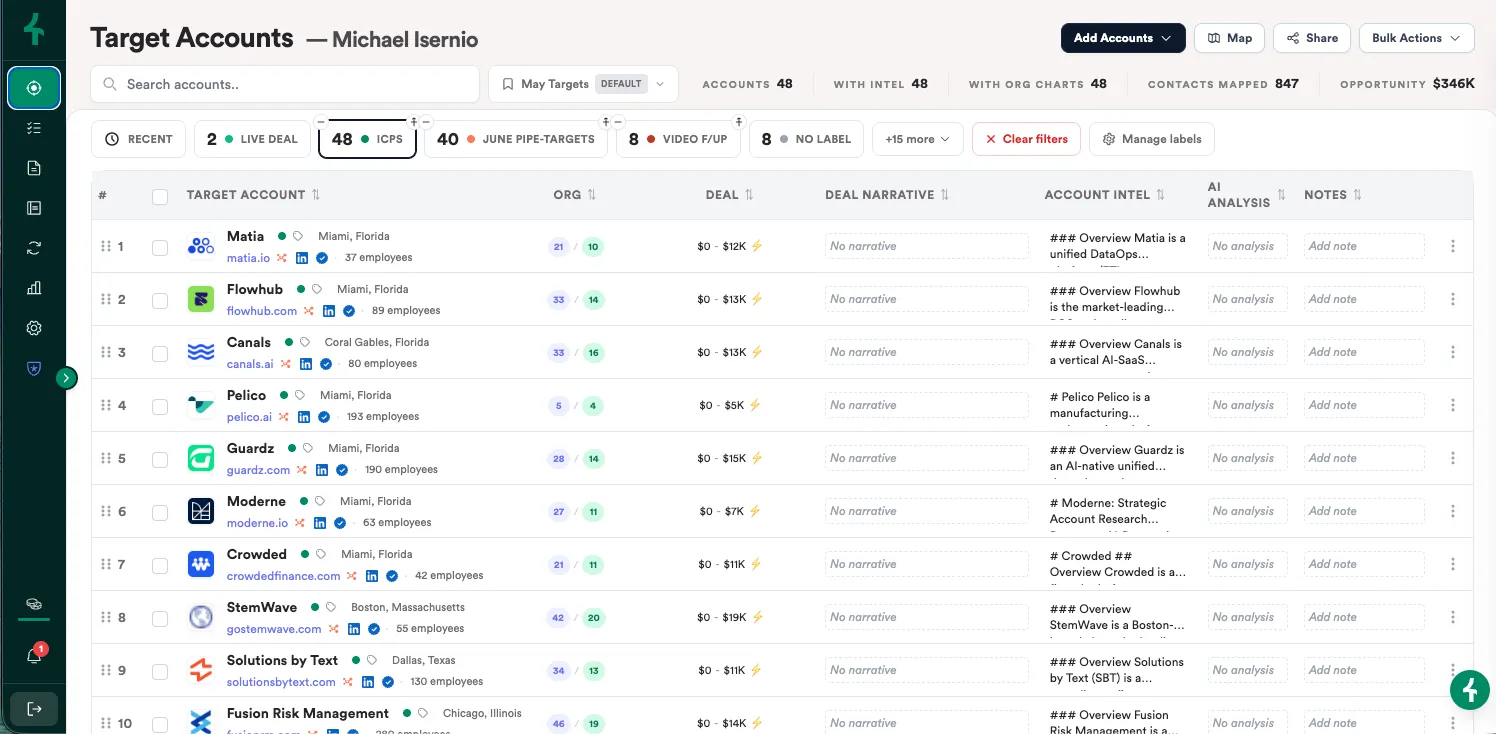
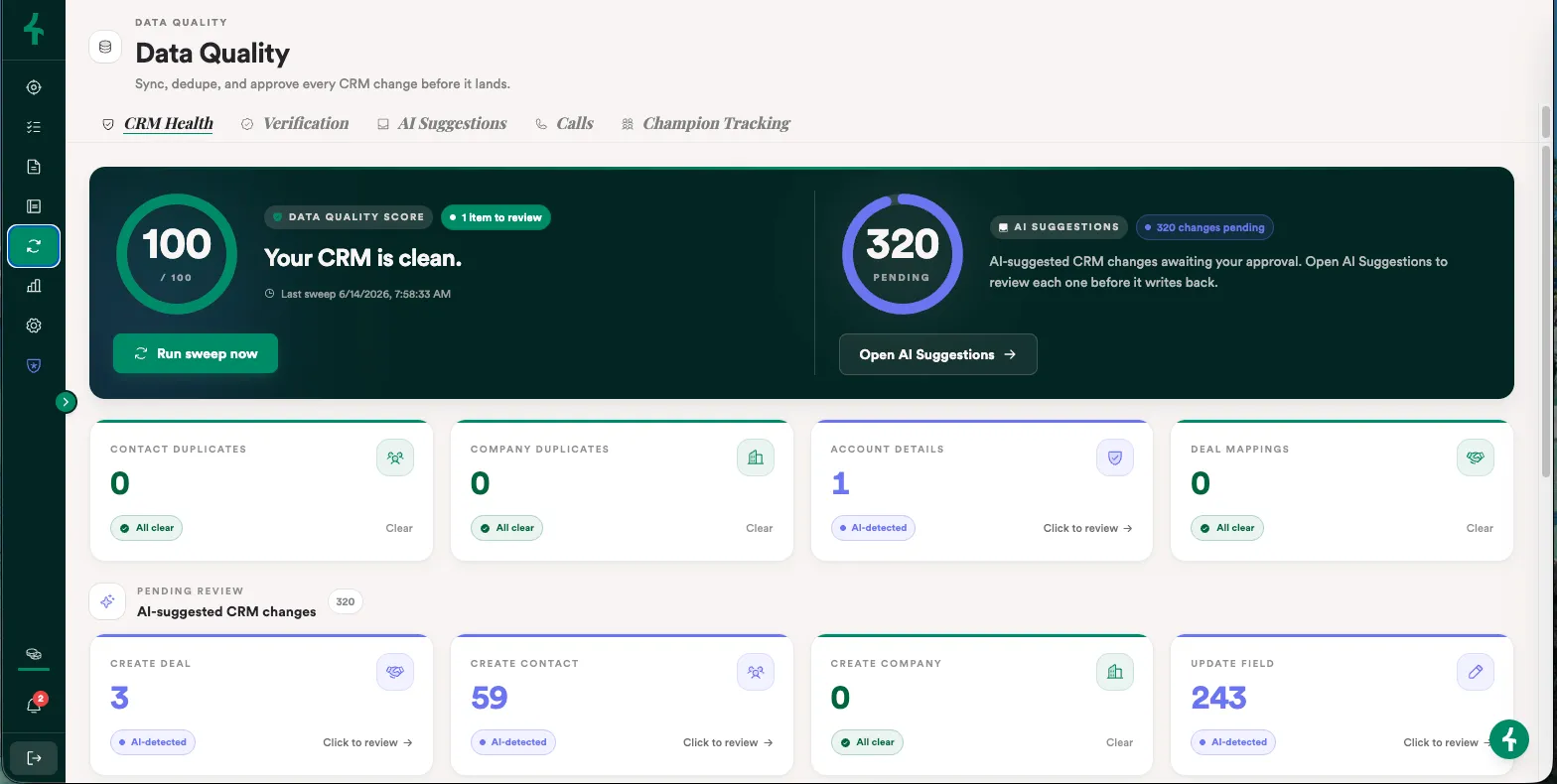
A forecast is only as good as the CRM under it, and the CRM is only as good as what a rep remembered to type on a Friday. Narrative closes that gap: every call is recorded and recapped, and the field-level updates — contacts, deal stages, next steps — come back as suggestions you approve one by one before anything writes to the CRM. With the account as the unit of measurement, you see pipeline, opportunity and how deep your committee coverage actually goes at account level — your accounts as a rep, your team's as a manager, the company's as a leader. You walk into the forecast call able to defend the number with the room in front of you, instead of a gut feel and a stage field.
Customer story
$40K MRR / $480K ACV
A PE-backed manufacturer needed bigger deals — so they implemented account-based sales, live in a weekend. $40K MRR sourced and closed in 60 days, off a named list.
Read the storyFirst-deal ROI
6×
2 months
18×
6 months
36×
12 months