Use case · Prospecting
Is outbound just a math equation?
If it were, the biggest list would win. Narrative works outbound as accounts instead — the companies whose initiatives and pains match your top customers, researched and drafted before your reps spend a minute.
Integrates with HubSpot and Salesforce
Narrative never sends for you. AI drafts every message and keeps each account's hypothesis current; the rep approves the wording, clicks send, and calls the outcome.
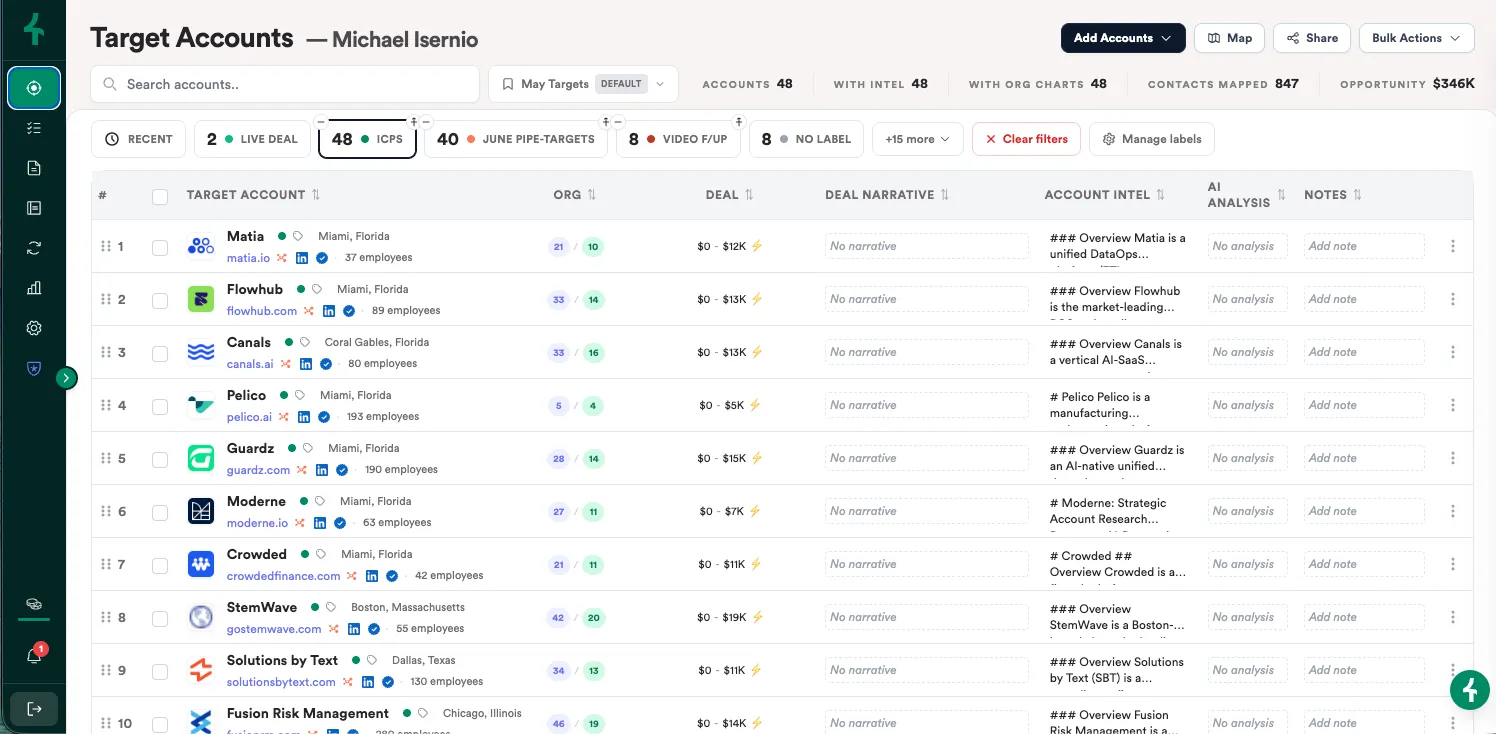
Define the target account list
If outbound were a math equation, this is the step where you'd buy the biggest list. It isn't — the list that wins is the one that matches. Tell Narrative what your top customers looked like before they bought — the initiatives they'd funded, the pains they were under — in the nuance a dropdown can't hold, and it runs the research and hands back the companies whose situation matches; you review, keep, and promote them into your target-account workspace. Reps start the week with a named list already worth their time, not the longest one anyone could export.
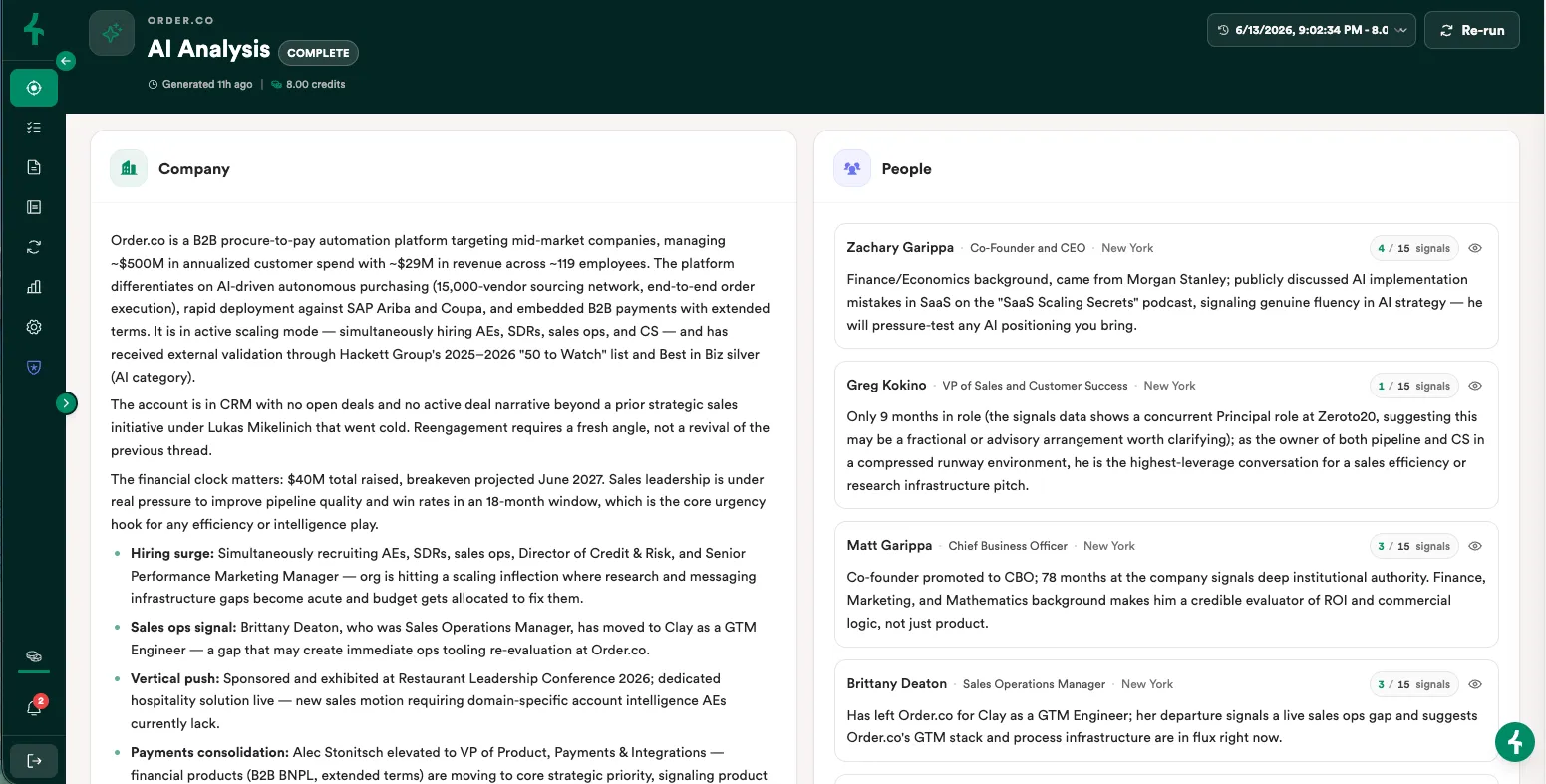
Map and research each account
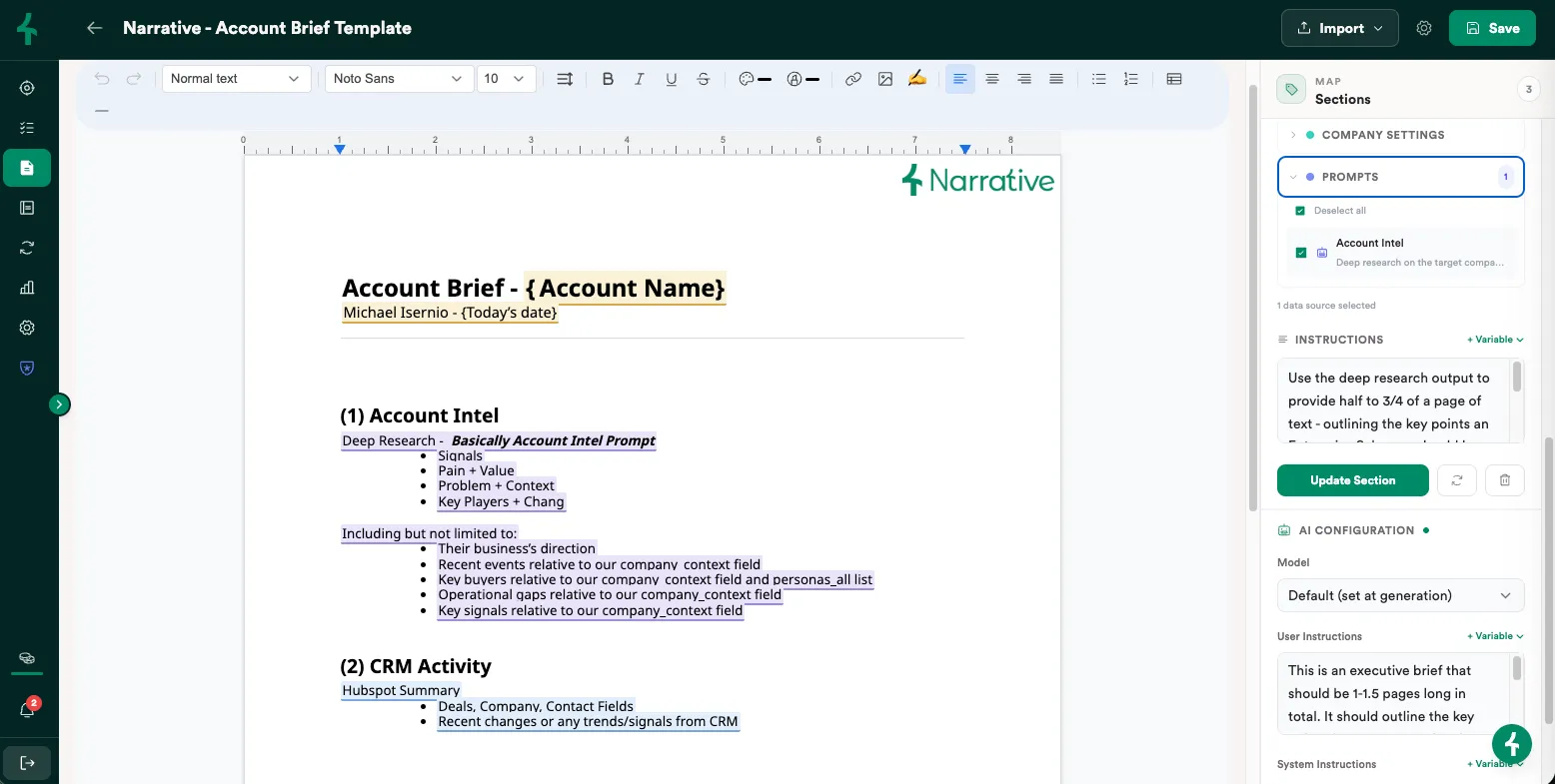
Before you can have a point of view, you need to know what this account is under pressure to fix. One click runs deep research across the company and the people in it — funded initiatives, priorities, recent moves — and returns a brief that tells you where to start instead of a wall of links. Every player gets the same treatment: role, tenure, and what they care about, in the sidepanel over their LinkedIn profile while you're already there. You walk in sounding like you did your homework, because it was done before you said hello. And this is where the math actually turns: a lead's research dies with the send, but an account amortizes the prep — the same brief keeps paying on every later touch to every player in the building.
Establish a hypothesis for each account
A hypothesis is the line you draw between what this account is trying to do and what you sell — one sentence you can be wrong about. Narrative holds one per account, drafted from that account's research and from what your top customers had in common before they bought, and every message the rep sends is written against it. It carries its own evidence and its own confidence, so "why we think they'd buy" is written down instead of living in one rep's head — and when it's wrong, you know which part was.
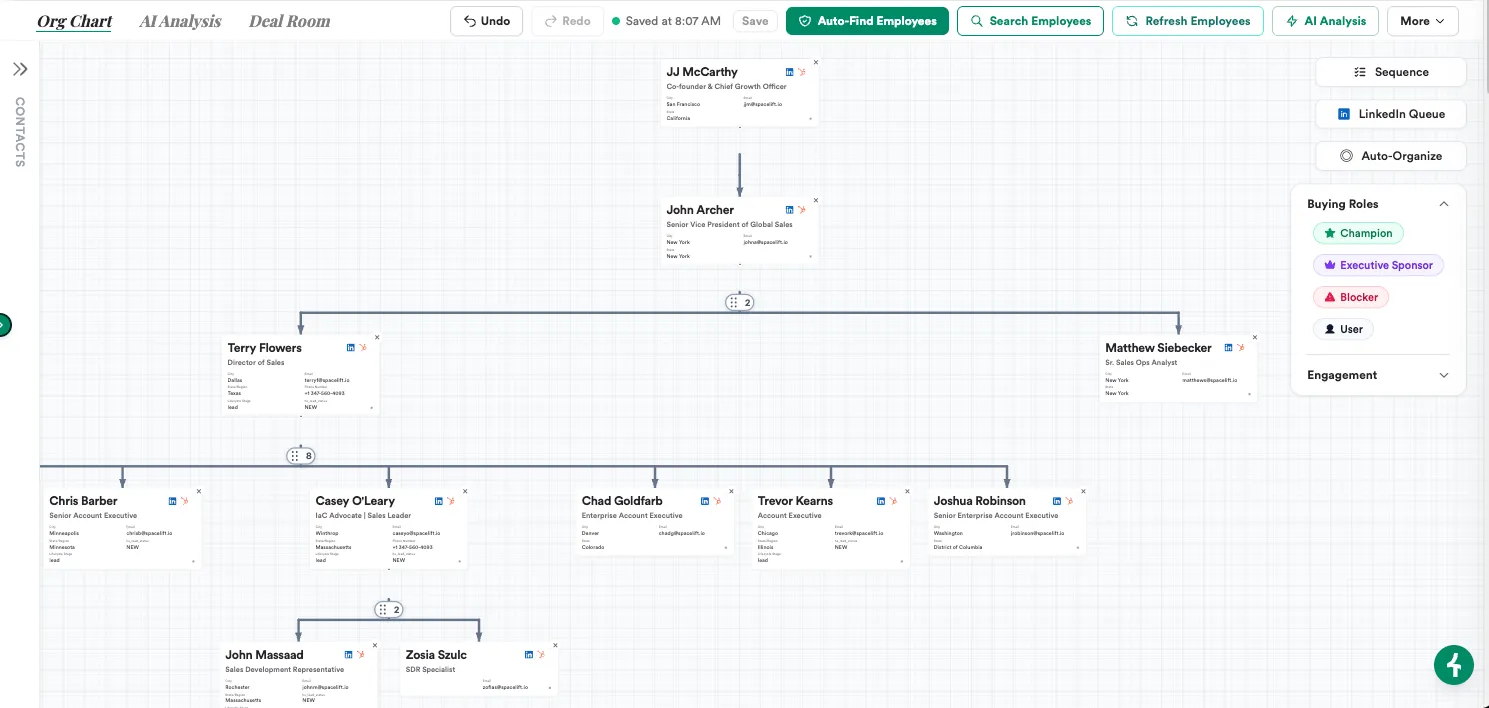
Assign a multi-threaded strategy to each account
One contact is not a strategy — the account decides, and the plan has to reach more than one desk. Narrative maps the account into an org chart you can tag by role, then you select the people you want straight off the canvas and enroll them in one action — email, calls, LinkedIn, whatever this account warrants. Build the cadence yourself, or tell Narrative your channels and context and fine-tune the sequence it drafts. Every step lands on the rep's task list to approve and send; nothing fires on autopilot.
Test your hypotheses using 1:1 messaging
This is where the hypothesis gets tested — not with a blast, but with a 1:1 message per person, drafted from that account's research and written against that account's hypothesis, in the rep's voice. Reps can run the plays your best sellers already proved instead of starting from a blank page, and they edit every line and click send themselves. Then the reply decides it: a booked meeting, a disqualification the rep makes in one click, or a new angle — the hypothesis revised and tested again. One contact going quiet is ambiguous; five people tested against one written claim going quiet is a verdict. That's the math that actually compounds: one written claim, tested account by account.